
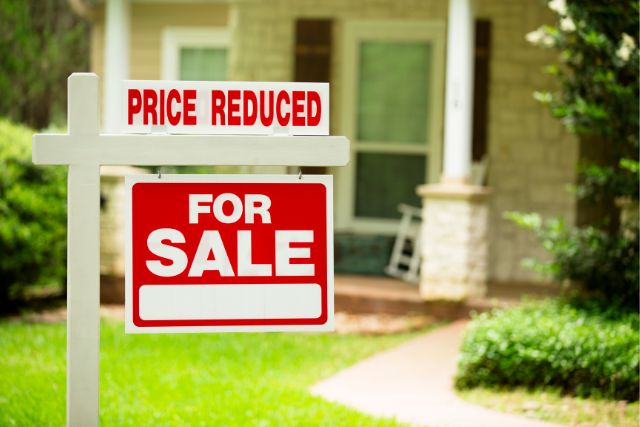
In many cases, you may worry about a house not selling in Canada when it’s clearly falling behind the market, and the signs suggest the problem is more than just normal timing.
Of course, a slow sale doesn’t always mean something’s wrong, but there does come a point where it stops looking fleeting and starts looking like a real issue worth addressing.
In this post, we’ll look at the clearest signs that a listing is not just moving slowly, but actually falling behind the market, what those signs usually mean, and when it makes sense to stop waiting and start adjusting your approach.
It Has Been Sitting Longer Than Comparable Homes
A home sitting on the market a little longer than expected isn’t always a red flag. In some markets, higher interest rates, shifting demand, or seasonal slowdowns can stretch out timelines across the board. What matters more is whether it’s still sticking around while similar homes in the same area and price range are selling.
When that starts happening, it usually means buyers see something less competitive about the listing. It could be the price, condition, presentation, or even the overall value compared to other options.
In many cases, this is one of the clearest signs that waiting may not be enough and something about the approach needs to change. If you’re not sure what to tackle first, having an experienced real estate agent in your corner can help put you on the right track.
Showings Are Slow or Have Stopped Altogether
If hardly anyone is booking showings, or the early activity drops off quickly, that usually means buyers just aren’t connecting with the listing.
Price can definitely be a factor here, but it’s not always the main reason. It can also point to weak photos, poor presentation, or a listing that isn’t standing out the way it needs to. Buyers usually decide pretty quickly whether a home feels worth seeing in person, so when the clicks are there but the showings are not, it’s usually a sign that something is missing.
And at the end of the day, a house can’t sell if buyers are not taking that first step.
Buyers Keep Raising the Same Concerns
Buyer feedback matters most when the same issue keeps coming up. Sure, one offhand comment is easy to brush aside, as not every buyer is going to see the home the same way, and some opinions are just personal preference.
But when multiple people keep pointing to the same thing — you know, the price feels high, the layout is awkward, the home needs updates, or the location isn’t quite working for them — that usually means they are all running into the same obstacle.
The key here isn’t to overreact to every piece of feedback, but to pay attention to patterns. At a certain point, repeated feedback stops sounding random and starts sounding useful.
A Price Drop Doesn’t Bring New Interest
A price drop should usually create some kind of reaction, even if it doesn’t lead straight to an offer. In an expensive market, buyers should love a deal, right?
But if the price changes and you’re not seeing any kind of uptick in showings or, at the very least, inquiries, the issue may be bigger than price alone. Buyers may still have concerns about the presentation, the marketing, or the home itself that are keeping them from moving forward.
At that point, it’s usually worth stepping back and looking at the full picture. A price cut that changes nothing is often a sign that the strategy, not just the number, needs a second look.
You’re Getting Attention, But Not Offers
Sometimes the warning sign isn’t a lack of interest, but a lack of offers. You may have plenty of buyers looking, asking questions, and even booking showings, but nothing is turning into anything serious.
That usually means the listing is pretty solid, but it still may not be strong enough to push buyers to act. In some cases, that comes down to price. In others, buyers may like the home in theory but hesitate once they see the layout, condition, or overall value in person.
Either way, this kind of pattern is worth paying attention to. In particular, if people are touring the home and still walking away, the problem could be showing up once they get a closer look.
If You’re Worrying About a House Not Selling in Canada, It May Be Time to Talk to an Agent
A slower sale on its own doesn’t always mean something is wrong. But when showings stay weak, buyers keep raising the same concerns, or interest never turns into a serious offer, it usually means the issue runs deeper than timing alone.
That’s often the point where it helps to bring in an experienced real estate agent. If you’re not sure what’s holding your listing back, Hawkins Real Estate Group can help you take a closer look and figure out what to do next. Contact us to speak with one of our experts today.